
First Modifications for Your 100 Series
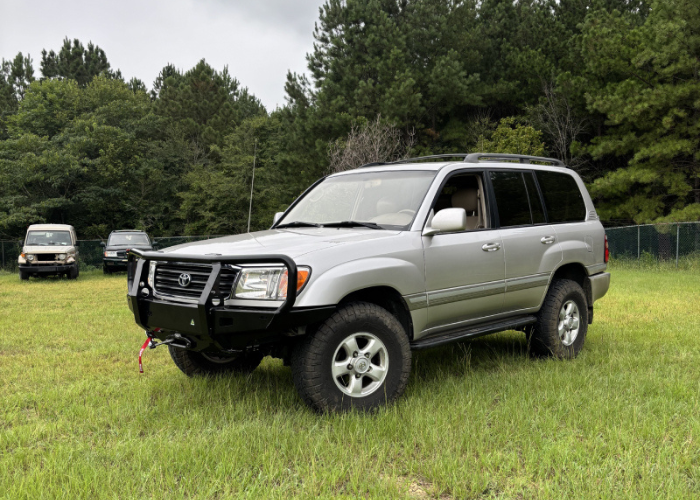
I’ve owned close to 20 Land Cruisers. Most of them got modified in some way. And the question I get more than almost any other is some version of: I want to do more with this truck. Where do I start?
The 100 Series is an incredible off-road platform right out of the box. Toyota built it to handle serious terrain. But the factory setup has real limitations if you’re planning to take it on trails, do any overlanding, or just want to know the truck can handle itself if things get rough.
There are three modifications I recommend to almost every 100 Series owner who wants to get off pavement. Not because they’re the flashiest upgrades you can do. Because they’re the ones that actually matter. Do these three things, in this order, and your truck is ready for almost anything.
Key Takeaways:
- All-terrain tires are the single most impactful upgrade you can make on a 100 Series.
- Rock sliders protect the most vulnerable part of the truck when things go sideways on trail.
- A winch is your self-recovery tool. You hope you never need it. You will be glad you have it.
- Order matters. Start with tires, then sliders, then the winch setup.
- These three upgrades work together. Each one builds on the last.
All-Terrain Tires: Start Here Every Time
If I could tell every 100 Series owner to do one thing before anything else, it would be to get off the factory tires. The stock tires on a 100 Series are highway tires. They’re fine on pavement. On dirt, gravel, mud, or rock, they are the weakest link on the truck.
All-terrain tires change the capability of the vehicle in a way that no other single modification can match. Better grip on loose terrain. More sidewall protection against punctures. Better load capacity. The truck was designed to handle serious terrain. The stock tires were designed to be quiet on the highway.
What to Look for in an All-Terrain Tire
For the 100 Series, I look for a tire with a 10-ply rating or higher. You want a thicker sidewall than a standard passenger tire. The 100 Series is a heavy vehicle, and a quality all-terrain tire is built to handle that weight on uneven ground without folding or puncturing.
Sizing matters too. A lot of owners go up slightly from the factory size. A modest size increase gives you a little more ground clearance and a bigger contact patch without requiring a lift. If you’re planning a lift kit down the road, factor that into your tire size decision now so you don’t end up buying tires twice.
What We Recommend at OTM
We’re not tied to one brand, but the tires we see hold up best on 100 Series trucks are in the BFGoodrich KO2, Falken Wildpeak AT3W, and Cooper Discoverer AT3 family. These are proven all-terrain tires with good load ratings, strong sidewalls, and track records on the kind of mixed terrain most of our customers drive.
The honest answer is that a quality all-terrain tire from any reputable manufacturer is a massive upgrade over the factory rubber. Don’t overthink the brand. Focus on load rating, ply count, and sizing.
What size all-terrain tires fit a stock 100 Series Land Cruiser? The factory tire size on most 100 Series trucks is 285/60R17. A 285/70R17 is a common and clean upgrade that fits without rubbing on a stock suspension and gives a small bump in ground clearance. Going larger typically requires a lift.
Do all-terrain tires make the 100 Series louder on the highway? Yes, somewhat. All-terrain tires are louder on pavement than highway tires. The trade-off is significantly better performance off pavement. Most owners adjust quickly and find the noise level acceptable, especially at highway speeds where wind and road noise are already present.
How often should I rotate tires on a 100 Series? Every 5,000 to 7,500 miles. The 100 Series is heavy, and uneven wear happens faster if you skip rotations. Include the full-size spare in your rotation if it’s the same wheel and tire as the other four.
Rock Sliders: Protect What Matters
The rocker panels on a 100 Series are the lowest structural point on the body when you’re picking a line on trail. They stick out past the frame. On a ledge, a steep drop-off, or any situation where the truck tips or slides sideways, the rocker panels are the first thing to contact the ground.
Without sliders, that contact bends sheet metal. Sometimes it bends it badly. A crushed rocker panel is an expensive body repair and, depending on the damage, can affect the structural integrity of the door opening. Rock sliders prevent that from happening.
What Makes a Good Rock Slider
The sliders we fabricate and install at OTM are made from heavy DOM steel tube, and they mount directly to the frame of the truck. That frame-mount is critical. Sliders that bolt only to the body are going to move when you need them most. If you put the full weight of the truck on a body-mount slider, it can pull the mounting points right through the floor. Frame-mounted sliders transfer the load into the chassis, where it belongs.
A good slider also gives you a step up into the truck. On a lifted 100 Series, that step height matters. Our sliders are designed to be functional on trail and clean enough to not look out of place on a daily driver.
Body Mount vs. Frame Mount
I want to be direct about this. Body-mounted sliders are cheaper. They look similar. But they are not the same thing and they do not perform the same way under load. If you’re paying for sliders and planning to use them, pay for frame-mounted sliders. The price difference is worth it the first time the truck slides off a ledge and the sliders do their job.
What are rock sliders on a Land Cruiser? Rock sliders are steel tubes or plates that mount along the lower sides of the truck, between the front and rear wheels, to protect the rocker panels from contact with rocks, ledges, and uneven terrain. On a 100 Series, they’re one of the most practical off-road upgrades available.
Are rock sliders the same as running boards? No. Running boards are designed for stepping up into the truck and are typically not built to handle the load of the vehicle resting on them. Rock sliders are structural. They’re built to take the weight of the truck without bending or pulling loose from the mounting points.
Can I install rock sliders on my 100 Series without a lift? Yes. Rock sliders work on a stock-height 100 Series. They provide protection regardless of ride height. A lift changes the geometry somewhat and may affect which sliders fit cleanly, but sliders are not dependent on having a lifted suspension.
A Winch: Your Self-Recovery Insurance
The winch is last in the order, but it’s not the least important. A winch is how you get yourself unstuck when everything else has failed. Mud, a washed-out trail, a soft shoulder you didn’t see coming. At some point, if you’re using this truck off-road, something like that is going to happen.
A winch means you don’t have to wait for someone else to come get you. You find an anchor point, hook up the line, and pull yourself out. That self-sufficiency is the whole point of a capable overland truck. A winch completes the picture.
Hidden Winch Mount vs. Full Bumper Replacement
There are two main ways to run a winch on a 100 Series. The first is a hidden winch mount. This is a steel plate that mounts behind the factory bumper. The winch sits on the plate, tucked behind the bumper, out of sight. You keep the factory look. The winch is there when you need it.
The second option is a full bumper replacement. You remove the factory bumper entirely and install an aftermarket steel bumper with the winch integrated into it. A steel bumper adds significant protection to the front of the truck. It also adds weight, changes the front-end appearance, and costs more.
For most owners, I recommend starting with the hidden winch mount. It’s less expensive, keeps the truck looking stock, and gives you everything you actually need from a winch. If you want the full bumper down the road, you can make that change later.
What Size Winch for a 100 Series
The 100 Series weighs around 5,500 pounds. The standard recommendation is a winch rated at 1.5 times the vehicle’s gross weight. That puts most 100 Series owners in the 9,500 to 12,000 pound winch range. We typically recommend a 10,000 to 12,000 pound winch with a synthetic line rather than steel cable. Synthetic line is lighter, safer if it snaps, and easier to handle.
What winch fits a 100 Series Land Cruiser? A 10,000 to 12,000 pound winch is the right range for a 100 Series. ARB, Warn, and Smittybilt all make quality winches in this range. We prefer synthetic rope over steel cable for ease of handling and safety.
What is a hidden winch mount on a 100 Series? A hidden winch mount is a steel bracket that bolts to the frame behind the factory front bumper. The winch mounts to the plate and sits tucked out of view. The factory bumper remains in place. It gives you full winch capability without changing the exterior appearance of the truck.
Do I need a winch if I mostly drive on forest roads and easy trails? It depends on how remote you go and whether you have a recovery partner. For solo trips into remote areas, a winch is a practical safety item, not just an accessory. For casual trail use with a group, a kinetic recovery strap and basic recovery gear may be enough to start.
The Right Order Matters
I get asked whether the order of these three upgrades matters. It does.
Tires go first because they change what the truck can do on every single drive from the day you install them. They’re also the foundation everything else builds on. A lift, if you add one later, is sized around your tire choice. Get the tires right first.
Sliders go second because they protect the truck. Before you start pushing into terrain that’s going to challenge the vehicle, you want the rocker panels covered. Sliders are cheap insurance relative to a body repair.
The winch goes third because it’s your recovery tool. You need to be in terrain that’s challenging enough to get stuck before the winch matters. Get to that point with the right tires and protected rocker panels first.
These three upgrades are what I’d call the foundation of a capable 100 Series. They don’t make the truck something it isn’t. They unlock what it already is.
Talk to Us Before You Buy Anything
If you’re planning modifications on your 100 Series, come talk to us before you start ordering parts. We’ve seen a lot of builds go sideways because the owner bought components that don’t work together, or sized tires that don’t fit their suspension setup, or chose a winch that’s underpowered for the truck.
We do this work in-house. Fabrication, installation, alignment after tire and suspension changes. We can help you plan the build in the right order so you’re not undoing anything later.
Reach out to us here for more info.
Related Reading: