
80 Series Head Gasket Failure
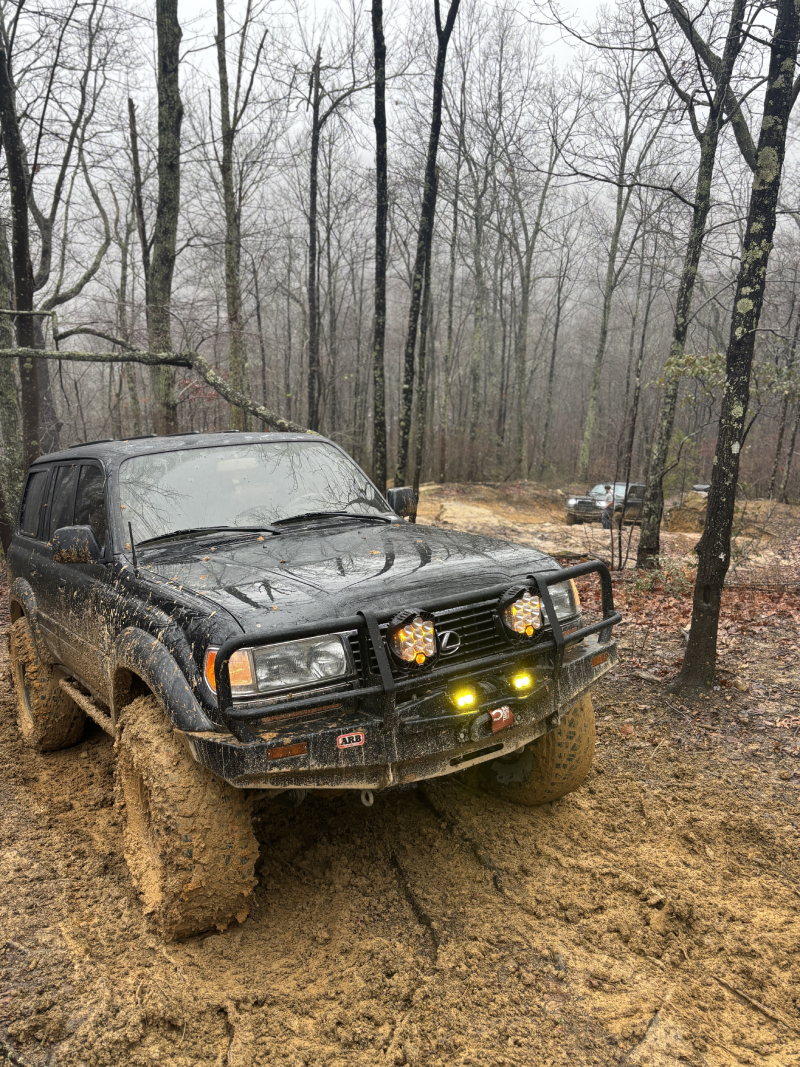
Head gasket failure on the 80 Series 1FZ-FE is one of the most talked-about issues in the Land Cruiser community. It’s talked about for good reason. It’s common enough that every 80 Series owner should understand it, and serious enough that catching it early versus late is the difference between a repair and a total loss.
I’ve done a lot of these. I’ve also seen what happens when an owner ignores the warning signs for too long. This post covers what causes head gasket failure on this engine, how to recognize it, and what the repair actually involves.
Key Takeaways:
- The 1FZ-FE head gasket has a known design limitation. It’s not a matter of if, it’s a matter of when and under what conditions.
- The most common cause is heat. A cooling system that isn’t maintained properly accelerates failure.
- Symptoms include white exhaust smoke, coolant loss, milky oil, and overheating.
- Catching it early means a head gasket replacement. Catching it late can mean a full engine rebuild.
- Do not drive a truck that is showing head gasket symptoms. Every mile makes it worse.
Why the 1FZ-FE Head Gasket Fails
The 1FZ-FE is a strong engine in almost every respect. It’s a 4.5-liter inline six-cylinder that makes smooth power and is built to run for a long time. The head gasket is the exception.
Toyota produced this engine from 1992 to 1997 in the 80 Series, and they revised the head gasket design at least twice during that production run because of known sealing issues. The original multi-layer steel gasket had a design that allowed combustion gases to leak past the sealing surface under certain conditions, particularly when the engine ran hot.
The fundamental issue is the relationship between heat, pressure, and the sealing surface between the cylinder head and the engine block. When the engine gets hot, both the aluminum cylinder head and the cast iron block expand. They expand at different rates. Over thousands of heat cycles, that differential expansion stresses the head gasket at the sealing surface. On the 1FZ-FE, that stress concentrates in specific areas that are prone to failure.
Heat as the Accelerant
A healthy cooling system manages the engine temperature and keeps that thermal stress within the range the gasket is designed to handle. A cooling system that’s degraded, that has a weak water pump, low coolant, or a failing thermostat, pushes the engine into temperature ranges where the head gasket is under more stress than it was designed for.
This is why cooling system maintenance is so important on the 80 Series specifically. It’s not just about keeping the engine cool. It’s about protecting the head gasket from the conditions that accelerate failure.
Why do 80 Series Land Cruisers have head gasket problems? The 1FZ-FE engine has a known head gasket design limitation that makes it more susceptible to failure than most engines of its era, particularly when the cooling system is not maintained or when the engine has experienced overheating. Toyota acknowledged this with multiple head gasket revisions during production.
Did Toyota fix the 80 Series head gasket problem? Toyota revised the head gasket design during the production run of the 1FZ-FE. Later-production trucks and engines that have had updated gaskets installed during a previous repair are in better shape than trucks running original gaskets. When we do a head gasket replacement, we use updated parts.
How to Recognize Head Gasket Failure
The symptoms of head gasket failure on the 1FZ-FE are consistent enough that once you know what to look for, you can recognize them. The challenge is that some of these symptoms show up well before the gasket has fully failed, which is exactly when you want to catch it.
White Exhaust Smoke
Coolant that enters the combustion chamber burns and exits through the exhaust as white smoke. This is different from the thin white vapor you see on a cold morning. That’s just condensation burning off and it disappears quickly. Persistent white smoke from the exhaust, especially after the engine is fully warmed up, is a head gasket symptom.
Unexplained Coolant Loss
If the coolant level in your reservoir is dropping and you can’t find an external leak, the coolant is going somewhere. On the 1FZ-FE, that somewhere is often the combustion chamber or the oil system. Either way, unexplained coolant loss on an 80 Series is a reason to get the truck inspected.
Milky or Foamy Oil
Pull the oil cap. Look at the underside. If there’s a milky, foamy, or mayonnaise-like residue on the cap or on the dipstick, coolant is mixing with the oil. This is one of the clearest signs of a head gasket problem. It’s also one of the most serious. Oil contaminated with coolant does not lubricate properly. Running a truck in this condition accelerates engine wear significantly.
Overheating Without an Obvious Cause
If the temperature gauge is climbing higher than normal and you can’t trace it to a specific cause like a low coolant level, a failed thermostat, or a bad water pump, the head gasket is on the list of suspects.
Bubbling in the Coolant Reservoir
With the engine running and fully warmed up, look at the coolant reservoir. If you see bubbling or a pressurized flow coming from the radiator hose, combustion gases are entering the cooling system. This is a definitive sign.
What are the symptoms of a blown head gasket on an 80 Series Land Cruiser? White exhaust smoke after the engine is warm, coolant loss without a visible external leak, milky or foamy oil, overheating without a clear cause, and bubbling in the coolant reservoir. Any one of these on a high-mileage 80 Series warrants immediate inspection.
Can you drive a Land Cruiser with a blown head gasket? No. Continuing to drive accelerates damage to the cylinder head and can cause the damage to spread to the point where a head gasket replacement is no longer sufficient. Stop driving the truck and have it inspected.
Will stop-leak fix a head gasket on an 80 Series? No. Stop-leak products are a temporary measure at best and can cause additional problems by clogging other cooling system components. A head gasket failure on the 1FZ-FE requires a proper mechanical repair.
What the Repair Actually Involves
A head gasket replacement on the 1FZ-FE is a significant job. I want to be honest about that. It’s not a catastrophic repair, but it’s also not something that’s done in an afternoon.
Removing the Cylinder Head
The engine has to be partially disassembled to access the head gasket. The intake manifold, exhaust manifold, valve cover, timing components, and various accessories all need to come off to get the cylinder head free from the block. This is a multi-hour job on its own before any actual gasket work begins.
Inspecting and Machining the Head
Once the cylinder head is off, we inspect it for warping and cracks. The 1FZ-FE cylinder head is aluminum, and aluminum warps when it overheats. A warped head will not seal properly against a new gasket. If the head is warped beyond a serviceable tolerance, it has to go to a machine shop for resurfacing before it can be reinstalled.
This is the part that can turn a straightforward head gasket job into a longer, more expensive repair. A truck that is caught early, before significant overheating has occurred, is more likely to have a head that doesn’t need machining. A truck that has been driven on a failing gasket for a while is more likely to have a damaged head.
Installing Updated Parts
When we put the engine back together, we use updated head gasket parts rather than reinstalling the same design that failed. We also replace any other components that are accessible during this disassembly and that show wear, such as the water pump, thermostat, and timing belt if those are due.
What to Expect After the Repair
A properly repaired 1FZ-FE with an updated head gasket and a healthy cooling system is a solid engine. We’ve seen these trucks go another 100,000 miles after a good head gasket job without issue. The repair restores the truck to where it should be.
How much does an 80 Series head gasket replacement cost? It depends on the condition of the cylinder head and what other work is done during the repair. A head that doesn’t need machining is less expensive than one that does. The job is always going to be a significant labor investment. Catching it before the head is damaged is meaningfully cheaper than catching it after.
How long does an 80 Series head gasket replacement take? At OTM, this is typically a multi-day job, especially if the head goes to a machine shop. Plan for the truck to be with us for several days.
Does an 80 Series head gasket job include the timing belt? We recommend doing the timing belt at the same time since the front of the engine is already disassembled. It adds minimal cost relative to the labor savings of not having to come back in later, and the timing belt on the 1FZ-FE should be replaced on schedule.
What to Do If You Think Your 80 Series Has This Problem
Don’t wait. That’s the most important thing I can tell you.
If you’re seeing white smoke, losing coolant you can’t account for, or you’ve noticed the temperature gauge running higher than it used to, call us. Stop driving the truck if the symptoms are active. Bring it in for a diagnosis.
We’ll do a cooling system pressure test, check for combustion gases in the coolant, inspect the oil, and give you a clear picture of what’s going on. If it’s the head gasket, we’ll tell you exactly what the repair involves and what it costs. If it’s something else, we’ll tell you that too.
This is not a situation that gets better with time or with hoping. It gets better with an accurate diagnosis and a proper repair. Get in touch with us here.