
Oil Leaks on the 100 Series Land Cruiser: Where to Look
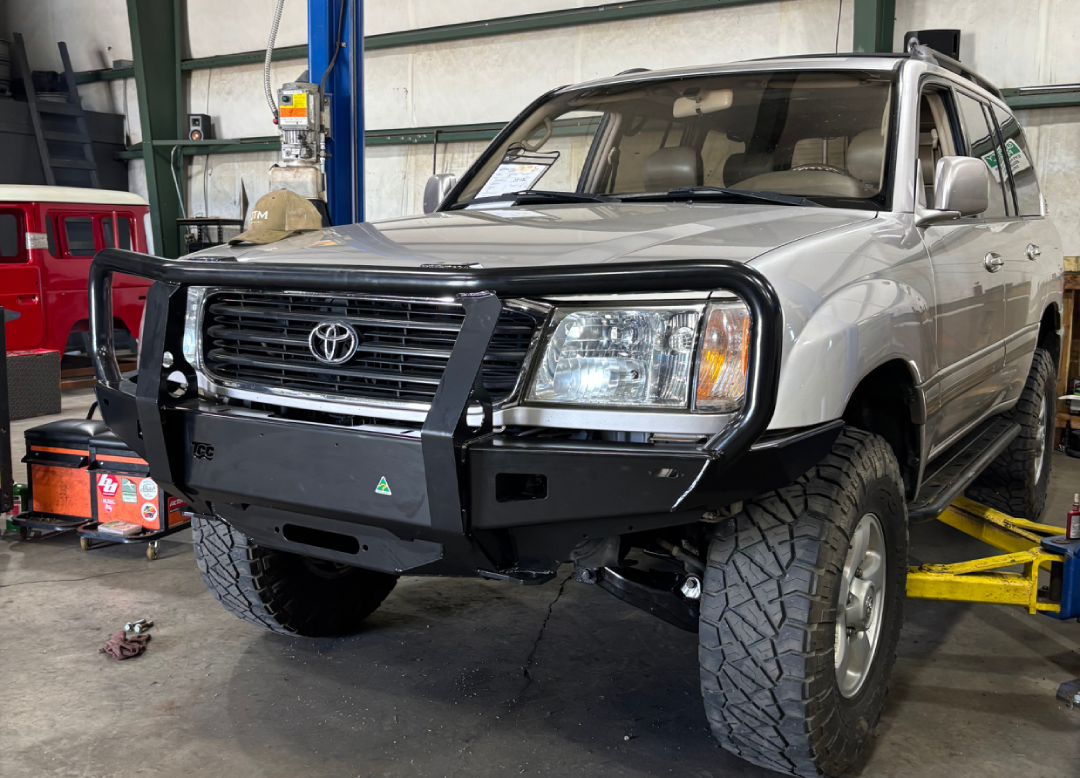
Most 100 Series trucks over 200,000 miles have at least one oil leak. That’s not a criticism of the platform. It’s just what happens to seals and gaskets on a vehicle that’s been running for 20 years. The engine expands and contracts with every heat cycle, seals age and harden, and eventually oil finds a path out.
The question isn’t usually whether a high-mileage 100 Series has a leak. It’s which leak, how fast it’s progressing, and what it costs to ignore versus address.
Here’s a guide to the most common oil leak locations on the 100 Series and what each one means.
Key Takeaways:
- Not all oil leaks are equally urgent. Location and rate of loss determine the priority.
- Valve cover and cam tower leaks are common and relatively simple. Rear main seal is not.
- The rear main seal requires removing the transmission to access. That’s where the labor cost comes from.
- Oil seeps that are slow today tend to get faster as the engine warms up and the oil thins.
- A pre-purchase inspection on a used 100 Series should always include getting underneath the truck.
Valve Cover Gaskets
The valve cover gaskets sit at the top of the engine and seal the valve covers against the cylinder heads. On a high-mileage 100 Series, these are often the first gaskets to show their age. The rubber hardens and shrinks over years of heat exposure. Oil seeps past the gasket and you get a slow drip or a residue buildup around the valve cover perimeter.
Valve cover leaks are low urgency compared to most other leaks on this list. The oil isn’t going anywhere fast, and the drip typically lands on the exhaust manifold below where it burns off and produces a faint burning oil smell rather than a visible puddle under the truck. But left alone, it builds up and the seep gets worse. It’s also something a shop will flag on any inspection, and rightfully so.
Replacing valve cover gaskets is one of the more accessible jobs on the 2UZ-FE. The covers come off without tearing the front of the engine apart. For a shop that knows the platform, it’s a reasonable service that makes sense to address before it becomes a larger mess.
What causes valve cover gasket leaks on a 100 Series? Age and heat. The rubber gasket material hardens over time and loses its ability to seal against the cover and the head. High-mileage trucks develop these leaks predictably. A burning oil smell without visible smoke is often the first sign.
Cam Tower Seals
The cam tower seals are closely related to the valve cover situation. The cam towers bolt to the top of the cylinder heads and house the camshaft. The seals around the cam tower base are another common seep location on higher-mileage trucks. You’ll often see oil residue where the cam towers meet the head, which can look worse than it is when it’s still a slow seep.
These seals are addressed when the valve covers come off. If we’re doing valve cover gaskets, we inspect and replace the cam tower seals at the same time. No reason to leave adjacent aging seals in place when the area is already open.
Oil Pump Cover Seals
The oil pump on the 100 Series sits at the front of the engine. The cover seals around it are another age-related leak point. These tend to seep rather than drip noticeably, which means they often go undetected until there’s accumulated residue on the front of the engine block or a tech notices it on a lift.
These seals are accessible during a timing belt service when the front of the engine is opened up. If a timing belt job is in the truck’s history and these seals were included, you’re likely in good shape. If the timing belt was done without addressing the seals, they’re worth looking at.
Rear Main Seal
The rear main seal is the one that gets owners’ attention on the estimate. It seals the back of the crankshaft where it exits the engine block. When it leaks, oil drips from the rear of the engine, which is why you’ll often see an oily residue on the bellhousing, the transmission, and sometimes on the ground directly under the engine-to-transmission junction.
The part itself is not expensive. Getting to it is. The rear main seal on the 100 Series requires removing the transmission and the transfer case to access. That is a multi-day job with significant labor involved. When customers see the estimate, the price can be surprising until I explain that we’re essentially removing the entire drivetrain from the back of the engine to get to one seal.
The decision of whether to do this repair comes down to how bad the leak is and what the rest of the truck’s condition looks like. A slow seep on a high-mileage truck with a lot of other deferred maintenance might not be the first priority. An active drip that’s putting oil on the ground regularly is a repair that makes sense to schedule.
Why is the rear main seal replacement so expensive on a 100 Series? The seal is located at the back of the crankshaft, behind the transmission and transfer case. Accessing it requires removing both of those components. The parts cost for the seal is modest. The labor cost reflects the full drivetrain disassembly required to reach it.
How do I know if my 100 Series has a rear main seal leak? Look at the junction between the engine and transmission from underneath the truck. An oily, wet appearance on the bellhousing or transmission input shaft area, or drips from that location, point to the rear main seal. It can also be confused with a transmission front seal leak, which is a related but separate repair.
Differential and Transfer Case Leaks
Gear oil leaks from the differentials and transfer case are worth distinguishing from engine oil leaks. The fluid is different, the smell is different, and the urgency is different.
Differential cover gaskets are a common leak on high-mileage trucks. The gear oil that seeps out is thick and dark and tends to collect on the differential cover and drop on the ground in a slow drip. It’s a straightforward gasket replacement.
Transfer case leaks tend to come from the output shaft seals or the front/rear output flanges. These are also manageable repairs. What matters is catching them before the fluid level drops low enough to cause wear inside the unit.
How do I tell the difference between an engine oil leak and a differential leak? Gear oil from differentials and the transfer case has a strong sulfur smell that’s distinct from engine oil. The location of the drip matters too. Drips from the axle housings or under the center of the truck near the transfer case point to the drivetrain rather than the engine.
Getting Underneath Your Truck
The honest takeaway from this post is that the expensive problems on a 100 Series are usually underneath it. A clean engine bay doesn’t tell you much. A visual inspection with the truck on a lift tells you a lot.
If you don’t know what’s leaking on your truck or how urgent any active leaks are, that’s something we can assess quickly. Get it on a lift and look. A diagnosis gives you a clear picture of what you’re working with and helps you prioritize what to address first versus what to keep an eye on.
Give us a call or schedule online here.
Related Reading: