
FJ40 Restoration: What a Barn-Find Revival Actually Takes
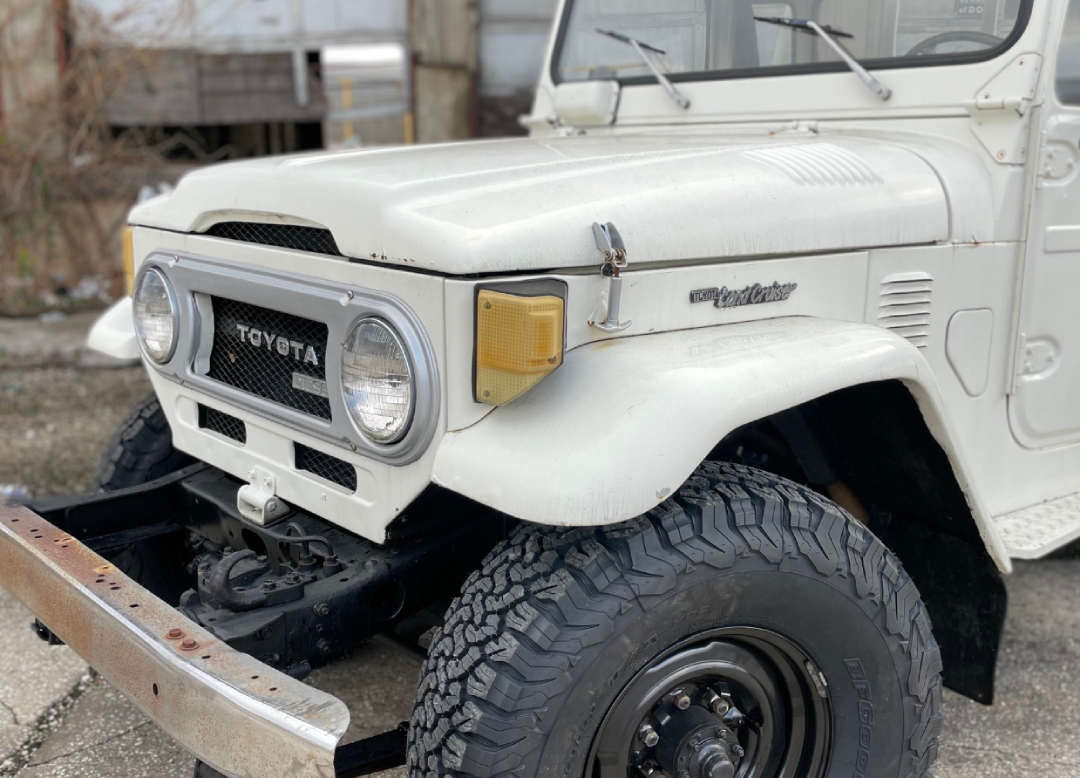
There’s something about an FJ40 sitting in a field or a barn that makes people want to rescue it. I understand that feeling completely. The FJ40 is one of the most iconic off-road vehicles ever built. Finding one that hasn’t been touched in 20 years feels like discovering something worth saving.
Most of them are worth saving. But the path from barn find to driver is longer than most people expect, and the surprises along the way are almost always expensive.
This post is about what a realistic FJ40 restoration actually involves. Not the YouTube highlight reel version. The real version.
Key Takeaways:
- A neglected FJ40 needs a full mechanical assessment before anything cosmetic is touched.
- Rust is the primary variable. It determines whether a restoration is feasible and what it will cost.
- Engine and drivetrain decisions come early and shape the entire project.
- Budget for surprises. Every FJ40 restoration has them.
- The end result is worth it. A properly restored FJ40 is a truck that can run for decades.
Start With an Honest Assessment
The first thing we do when an FJ40 comes in for a restoration evaluation is put it on a lift and spend time looking at it honestly. Not looking for what can be saved. Looking at what’s actually there.
Rust is the primary concern. On a 40 to 50-year-old vehicle, rust tells the story of where the truck has been and what it’s been through. Surface rust on body panels and frame rails is expected and manageable. Deep rust that has penetrated the frame, the floor pans, the firewall, or the cab corners is a different conversation. It doesn’t make a truck unrestorable, but it changes the scope and the cost significantly.
After rust, we look at the mechanical systems. Engine condition, transmission and transfer case, axles and differentials, brake system, fuel system. A truck that’s been sitting for years has fluids that have degraded or evaporated, seals that have dried out, and fuel system components that may be gummed or corroded. None of that is insurmountable. But all of it has to be addressed.
Is an FJ40 with rust worth restoring? It depends on the extent and location of the rust. Surface rust on a solid truck is a cosmetic concern. Structural rust on the frame or cab requires more significant work but can still be addressed by a shop with fabrication capability. An honest pre-restoration assessment tells you what you’re working with before any money is committed to the project.
How do I know if an FJ40 I’m looking at is a good candidate for restoration? The frame, floor, and firewall are the most important areas to assess. Get underneath it with a flashlight and a screwdriver. Probe any rust you see. Soft metal indicates deeper rust that goes beyond the surface. A truck with solid structural metal, even if it’s rough cosmetically, is a better candidate than one with beautiful body panels and a compromised frame.
The Engine Decision
One of the first decisions in any FJ40 restoration is what to do with the engine. The FJ40 came with several different powerplants over its production run, most commonly the F engine in earlier trucks and the 2F in later ones. Both are reliable inline six-cylinders when they’re in good condition. Both are getting harder to find parts for.
The condition of the original engine matters. If it runs reasonably well and has compression, rebuilding it is a legitimate path. An F or 2F that’s running is a lot easier to work with than one that’s seized or missing.
The LS Swap Option
The GM LS engine swap is the most popular powertrain upgrade on the FJ40. The logic is straightforward. The original F and 2F engines make somewhere around 125 to 155 horsepower depending on the year. An LS3 with a proper swap makes over 400. Parts are plentiful. Shops that do LS work are everywhere. The swap is well-documented.
An LS swap on an FJ40 is not a cheap job. Between the engine, transmission, motor mounts, adapters, wiring harness management, fuel system changes, cooling, and exhaust fabrication, a proper LS swap is a significant investment. But on a truck that’s going to be used hard and driven regularly, the performance and parts availability argument is real.
For owners who want to keep the truck as original as possible, a rebuilt 2F is the right answer. For owners who want a truck that can run with modern traffic and handle demanding terrain without working as hard, the LS conversation is worth having.
How much does an LS swap on an FJ40 cost? A properly executed LS swap on an FJ40 is a significant project. Engine acquisition, transmission, custom mounts and adapters, fuel system, cooling system modifications, and wiring all add up. Budget accordingly and understand that the quality of the execution matters as much as the parts chosen. A cheap swap done poorly creates problems. A well-engineered swap done right is a truck that drives like a completely different vehicle.
Should I rebuild the original engine or swap it on my FJ40? Both are legitimate paths and the right answer depends on your goals. If originality matters to you, a rebuilt F or 2F is the correct choice. If performance, modern driveability, and parts availability are priorities, an LS swap is worth considering. Either decision shapes the rest of the build, so it’s worth thinking through before the project starts.
Axles, Drivetrain, and Running Gear
The axles on an FJ40 are capable but old. On a truck that’s been sitting or used hard, the differentials, axle seals, bearings, and steering components all need to be gone through. We rebuild these rather than assume they’re fine. An axle failure on trail is not the kind of surprise anyone wants.
The transfer case and transmission get the same treatment. Fluids are drained and inspected. If there’s contamination or excessive wear metal in the fluid, the unit comes apart for a proper rebuild before it goes back in. Skipping this step is how you end up doing the work twice.
Brakes on FJ40s are drum all the way around from the factory. They work, but they’re from a different era. Many restorations upgrade to disc brakes in front, which improves stopping performance meaningfully. That’s a decision that gets made during the build planning phase.
Body and Interior
The body and interior are where most owners focus first, and they’re the last place I focus. The mechanical foundation has to be right before any cosmetic work begins. A truck that looks perfect but has a tired drivetrain is still a truck that’s going to let you down.
That said, body work on a bare FJ40 tub is satisfying work. The lines are simple. There’s not much complexity. Panel work, rust repair where needed, seam sealing, and paint are all straightforward for a shop with bodywork capability.
Interior builds on FJ40s are intentionally sparse. These trucks were work vehicles. Most restorations keep that spirit. Vinyl or marine-grade upholstery, a modern stereo if the owner wants one, updated lighting. The focus stays on durable and functional.
What a Restoration Timeline Looks Like
I’m honest with every FJ40 owner who brings us a project: a full restoration takes time. Months, not weeks. Parts sourcing takes time, especially for the original drivetrain. Fabrication takes time. Finding surprises, addressing them, and moving forward takes time.
The owners who have the best experience are the ones who understand the timeline going in and are realistic about the budget. Restorations rarely cost exactly what the initial estimate suggests. There are almost always things discovered during the process that weren’t visible in the initial assessment. That’s not a failure of planning. It’s the nature of restoring a 40- or 50-year-old truck.
The owners who are frustrated are usually the ones who came in expecting a number and a date and are surprised when both change. We try to set expectations correctly from the beginning.
How long does an FJ40 restoration take? A full mechanical and cosmetic restoration typically takes several months. The timeline depends on the scope of the work, parts availability, and what’s discovered during the process. A drivetrain-only restoration or a mechanical refresh on a truck that runs is significantly faster than a full frame-up build.
Ready to Talk Through a Project?
If you’ve got an FJ40 that needs a home or a project truck that’s been sitting in your garage waiting for the right shop, bring it in. We’ll take a look, give you an honest assessment, and talk through what the project actually involves before any commitments are made.
Come by the Leeds shop at 8444 Parkway Drive or reach out to us here.
Related Reading: