
How to Choose All-Terrain Tires for Your Land Cruiser
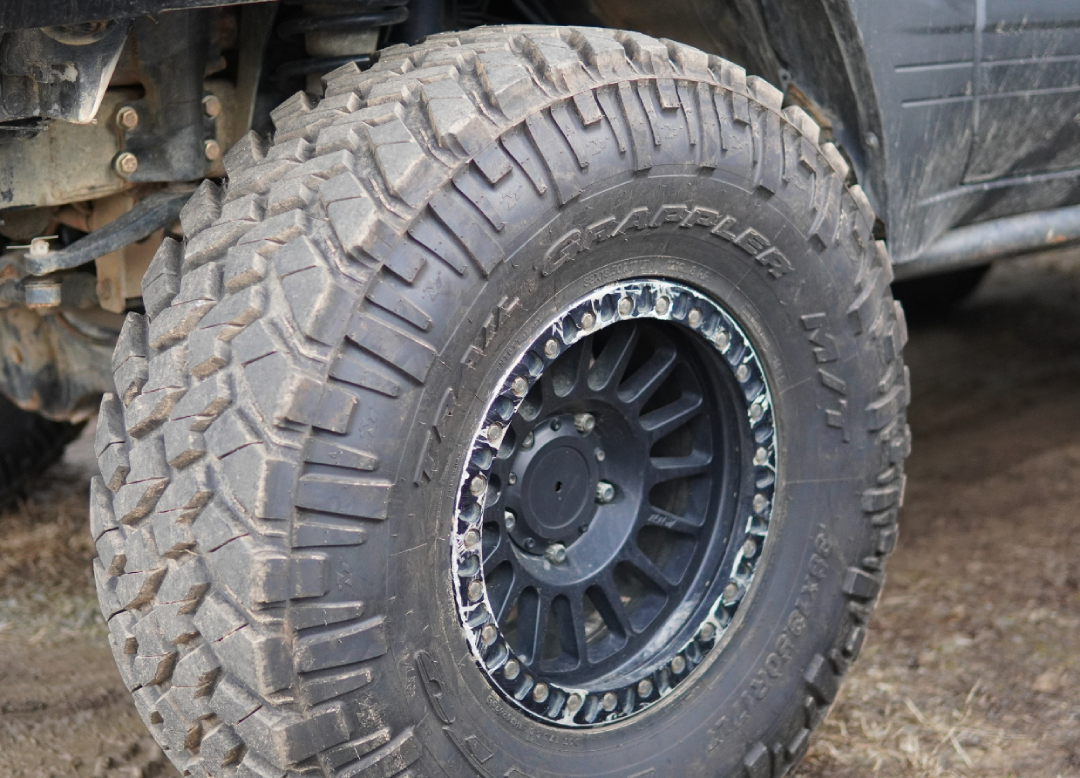
Tire selection is one of those decisions that gets complicated fast. You search for all-terrain tires and end up with 40 options, conflicting reviews, and a lot of marketing language that doesn’t tell you much about what actually matters for a heavy off-road vehicle.
I’ve put a lot of tires on Land Cruisers over the years. Here’s how I think through the decision.
Key Takeaways:
- Load rating and ply count matter more than brand for a heavy truck like the 100 or 80 Series.
- Sizing up from factory is possible on a stock suspension, but know your limits before you buy.
- All-terrain tires will be louder on pavement. That’s the trade-off. It’s worth it.
- Rotate them every 5,000 to 7,500 miles and include the spare.
- A quality all-terrain tire is the single biggest capability upgrade on most Land Cruisers.
Why Stock Tires Are Holding Your Truck Back
The factory tires on a 100 or 80 Series are highway tires. They’re designed for quiet, comfortable highway driving. They’re not designed for the kind of mixed terrain these trucks are capable of handling.
On loose dirt, gravel, wet grass, or any soft surface, a highway tire’s tread pattern has nowhere near enough bite. The 100 Series has a capable four-wheel-drive system, locking differentials, and good suspension articulation. All of that capability is limited by what the tires can do. Putting an all-terrain tire on the same truck unlocks what’s already there.
The difference is immediately noticeable. On a dirt road, a muddy trail exit, or a steep gravel incline, an all-terrain tire with a proper load rating and an open tread pattern performs differently than a highway tire. The improvement isn’t subtle.
Load Rating: The Number That Matters Most
The 100 Series weighs around 5,500 pounds from the factory. Add a full load of gear, passengers, and any added weight from modifications and you can be well over 6,000 pounds. That weight has to be supported by four tires, with a lot of that load concentrated at each contact patch.
A passenger car tire load rating is not appropriate for this truck. You want a tire rated for the weight it’s going to carry. For a 100 or 80 Series, I look for tires with a load range E rating or higher. Load range E is a 10-ply equivalent, meaning the tire casing is built to handle heavier loads and resist sidewall damage better than a lighter-duty tire.
This is the spec I’d prioritize over brand, over tread pattern, over price. Get the load rating right first.
What load range tires should I use on a 100 Series Land Cruiser? Load range E at minimum. These trucks are heavy and carry heavy loads. A lighter-load-rated tire will technically fit but isn’t appropriate for the weight and the type of use these trucks see. The stiffer sidewall of a load range E tire also provides better puncture resistance off-road.
What is the difference between load range D and load range E tires? Load range E tires have a 10-ply equivalent casing versus load range D’s 8-ply equivalent. On a heavy truck used off-road, the additional casing strength of a load range E tire provides better load support and better resistance to sidewall damage from rocks and debris.
Sizing: What Fits and What Doesn’t
The factory tire size on the 100 Series is 285/60R17. It’s a capable size for a stock-height truck and most owners run something close to it. The most common upgrade is to a 285/70R17, which gives you a slightly taller overall diameter, a small bump in ground clearance, and a slightly larger contact patch. This size fits on a stock suspension without modification on most trucks.
Going larger than that on a stock 100 Series starts to involve trade-offs. A taller tire can rub on the fenders or on the upper control arm at full lock depending on the exact size and brand. It also changes the speedometer calibration and puts additional strain on the drivetrain.
If you’re planning a lift kit, your tire size options open up. But the tire decision and the lift decision are related. If you’re going to lift the truck, wait and size the tires after the lift is planned so you’re not buying a set of tires that’s sized for the stock height and then buying again after the lift.
What size all-terrain tires fit a stock 100 Series without a lift? 285/70R17 is the most common upgrade size that fits without rubbing on a stock suspension. Some owners go to a 295/70R17 depending on the brand and offset of the wheel, but fitment can vary. Always confirm fitment for your specific setup before purchasing.
Do I need a lift to run larger tires on a 100 Series? Not for a modest size increase. A 285/70R17 typically fits cleanly on a stock 100 Series. Going to a 315-width or a taller overall diameter than about 34 inches usually requires a suspension lift to clear properly.
Tread Pattern: Open vs. Aggressive
All-terrain tires sit between a highway tire and a mud-terrain tire on the spectrum of off-road capability. They’re designed for mixed use. Good performance on dirt, gravel, and moderate trail terrain while still being usable on pavement every day.
Within the all-terrain category, tread patterns vary. A more open, aggressive tread pattern bites better in loose material but is louder on the highway and wears faster on pavement. A tighter all-terrain pattern is quieter and longer-lasting on road but gives up some off-road performance.
For most 100 Series owners who are doing a mix of daily driving and occasional trails, a mid-range all-terrain tread is the right call. Tires like the BFGoodrich KO2, Falken Wildpeak AT3W, or Cooper Discoverer AT3 are in that range. They’re proven tires with strong load ratings and good sidewalls that perform well without being punishing on the highway.
Are BFGoodrich KO2 tires good for a Land Cruiser? Yes. The KO2 is one of the most widely used all-terrain tires on Land Cruisers and similar platforms. It’s available in load range E, handles mixed terrain well, and has a strong sidewall. It’s a proven choice that comes up consistently in long-term use.
How long do all-terrain tires last on a 100 Series Land Cruiser? It depends on how the truck is used and whether tires are rotated on schedule. On a daily driver with regular rotations, a quality all-terrain tire should give 50,000 to 60,000 miles. Off-road use and irregular rotations shorten that. Running a load range E tire in the correct size helps even out wear.
Rotation and Maintenance
All-terrain tires on a heavy truck wear unevenly if they’re not rotated regularly. The front tires take more braking stress and steering wear. The rears carry more of the load. Rotating every 5,000 to 7,500 miles distributes that wear and extends the life of the set significantly.
Include the full-size spare in your rotation if it matches the other four. A spare that’s the same tire and wheel as the set should be in the rotation. A truck with four tires at 40,000 miles and a spare at zero miles is not set up for a clean trail recovery if you need to swap to the spare on a remote trail.
Questions Before You Buy
Before you order tires, have answers to these questions.
Are you planning a lift? If yes, plan the tire size around the lift, not the stock height.
What is your primary use? Daily driver, trail use, overlanding, or some combination? The right tread pattern depends on the ratio.
What is the wheel offset on your truck? If you’re running aftermarket wheels, the offset affects fitment. Confirm it before ordering.
If you want to talk through the right tire for your specific setup before you order, call us. It’s a quick conversation that can save you from buying the wrong size or the wrong load rating.
Reach out to us here.
Related Reading: