
Winch Selection for the Land Cruiser
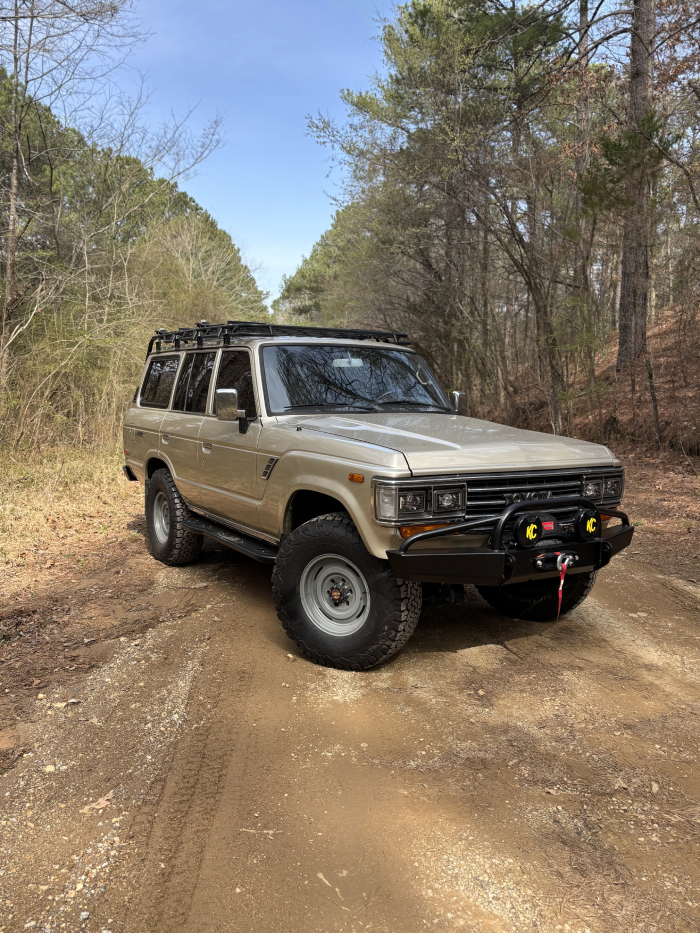
A winch is the one piece of recovery gear that works when everything else has failed. Traction boards, a recovery strap, a shovel. Those all have situations where they’re the right tool. But when you’re stuck in a spot where there’s no recovery partner, no leverage, and nothing else is going to get you out, a winch attached to a solid anchor point is what brings the truck home.
Most Land Cruiser owners who do any serious off-road or overlanding eventually add a winch. The question is how. On a 100 Series, there are two main approaches, and they’re meaningfully different from each other.
Key Takeaways:
- A hidden winch mount puts the winch behind the factory bumper. You keep the stock look and save money.
- A full bumper replacement integrates the winch into a steel bumper that provides additional front-end protection.
- For most owners, the hidden mount is the right starting point.
- Winch capacity for a 100 Series should be 10,000 to 12,000 pounds rated pull.
- Synthetic rope is the right choice over steel cable for safety, weight, and ease of handling.
Why a Winch Belongs on a Trail Truck
Self-recovery is the whole point. When you’re overlanding or running trails with a group, a kinetic strap and a recovery vehicle gets you out of most situations. When you’re solo, or when the entire group is stuck, the winch is the self-rescue tool.
The scenarios where a winch matters are usually the ones you didn’t plan for. A trail that looked manageable and wasn’t. A soft shoulder that gave way. A water crossing that was deeper than it appeared. In those moments, the difference between a winch and no winch is the difference between getting out yourself and waiting for someone to come find you.
A 100 Series is a capable enough truck that most owners don’t get into situations where they need a winch on easy or moderate trails. But capable trucks go to more challenging terrain over time. The owners who have winches are the ones who’ve been in a situation where they needed one, or the ones who planned ahead before they got there.
Option One: Hidden Winch Mount
A hidden winch mount is exactly what it sounds like. It’s a steel plate that bolts to the frame of the truck behind the factory front bumper. The winch mounts to the plate, sits tucked behind the bumper, and is not visible until you need it.
What You Keep
The factory bumper. On the 100 Series, this matters to a lot of owners because the stock front end has a clean look that a full bumper replacement changes significantly. A hidden mount lets you run a capable winch without altering the appearance of the truck.
What You Get
Full winch capability. A properly mounted hidden winch mount on a 100 Series gives you the same functional pull as a winch integrated into an aftermarket bumper. The winch line exits through the factory bumper opening or a small cutout, depending on the mount design. When you need it, you use it the same way you would any other winch setup.
The Trade-Off
You’re not getting the front-end protection of a steel bumper. The factory bumper on a 100 Series is plastic-faced and not designed to take serious impacts. If the front of the truck contacts something hard on trail, the factory bumper takes the damage. A hidden mount doesn’t change that.
For owners who run moderate terrain and want winch capability without a significant visual change or a large investment, the hidden mount is the right call. It’s also the right starting point if you’re not sure yet whether you want to go further with the build.
What is a hidden winch mount on a Land Cruiser? A hidden winch mount is a steel bracket that bolts to the frame behind the factory front bumper. The winch mounts to the bracket and sits out of sight. The factory bumper remains in place, preserving the stock appearance while adding full winch capability.
Can a hidden winch mount handle the same load as a full bumper winch setup? Yes. The load rating of a hidden mount depends on the quality of the mount and how it connects to the frame, not whether there’s a bumper around it. A properly engineered hidden mount handles the same pull forces as a winch integrated into an aftermarket bumper.
Option Two: Full Bumper Replacement
The full bumper replacement removes the factory front bumper entirely and replaces it with an aftermarket steel bumper that integrates the winch. This is a more significant change in every direction.
What You Get
A steel bumper provides real protection. If the front of the truck contacts a rock, a tree, or a trail obstacle, a steel bumper takes that contact without the damage a factory plastic-faced bumper would sustain. On technical terrain where approach angle matters and where the front of the truck might contact obstacles, the bumper is the right answer.
Most aftermarket steel bumpers for the 100 Series also provide additional clearance and better approach angles than the factory bumper. Some include integrated light mounts, recovery points, and other features that make the front end of the truck more capable and more versatile.
The Trade-Off
Weight, cost, and appearance. A quality steel bumper adds meaningful weight to the front of the truck, which affects front suspension loading and can accelerate wear on front-end components if not addressed with appropriate support. The cost is significantly higher than a hidden mount. And the look of the truck changes substantially. A 100 Series with a full steel bumper looks like a purpose-built trail truck, which is what it is. Owners who want to keep the truck more discreet for daily use may not want that.
How much does a full bumper replacement cost on a 100 Series Land Cruiser? Quality steel bumpers for the 100 Series from reputable manufacturers represent a meaningful investment above a hidden mount, plus installation labor. The total cost depends on the bumper, the winch, and what else is done during the installation. It’s a significant addition to a build but one that adds real protection and capability.
What is the best aftermarket bumper for a 100 Series Land Cruiser? Several manufacturers make quality options for the 100 Series. The right choice depends on your priorities around weight, clearance, integrated features, and overall build direction. We can walk through the options with you based on how you use the truck.
Choosing the Right Winch
Whichever mounting approach you choose, the winch capacity and rope choice matter.
Capacity
The 100 Series weighs around 5,500 pounds from the factory. Add gear, passengers, and modifications and you’re heavier. The standard recommendation is a winch rated at 1.5 times the vehicle’s gross weight. That puts a loaded 100 Series in the 9,500 to 12,000 pound range. We recommend a 10,000 to 12,000 pound rated winch for this platform.
Undersizing a winch is a mistake. A winch that’s working at or near its capacity rating runs hot, wears faster, and is more likely to fail when you actually need it.
Synthetic Rope vs. Steel Cable
Steel cable is what winches came with for decades. Synthetic rope is what most serious off-road operators have switched to, and for good reason.
Synthetic rope is lighter. It’s easier to handle with bare hands. When it breaks under load, it drops rather than recoiling with the stored energy of a steel cable. A snapped steel cable under tension can cause serious injury. A snapped synthetic rope is a much safer failure. Synthetic rope also doesn’t develop the dangerous kinks and broken strands that steel cable develops over time.
The trade-off is that synthetic rope is more susceptible to UV degradation and abrasion damage and needs to be inspected and eventually replaced. For most owners that maintenance is worth the safety and handling advantages.
Should I get a winch with synthetic rope or steel cable? Synthetic rope for most applications. It’s lighter, safer if it breaks, easier to handle, and doesn’t develop the dangerous wear that steel cable does. It requires more inspection and eventual replacement, but the safety advantage over steel cable is significant.
Getting This Done Right
A winch installation isn’t complicated, but it needs to be done correctly. The mounting has to be solid. The electrical connections have to be made properly for the winch to perform reliably under load. The fairlead and rope routing matter.
At OTM, we install winches as part of broader builds and as standalone additions. If you’re ready to add a winch to your 100 Series and want to talk through the mount options first, come by and we’ll look at the truck together.