
100 Series Land Cruiser Common Problems
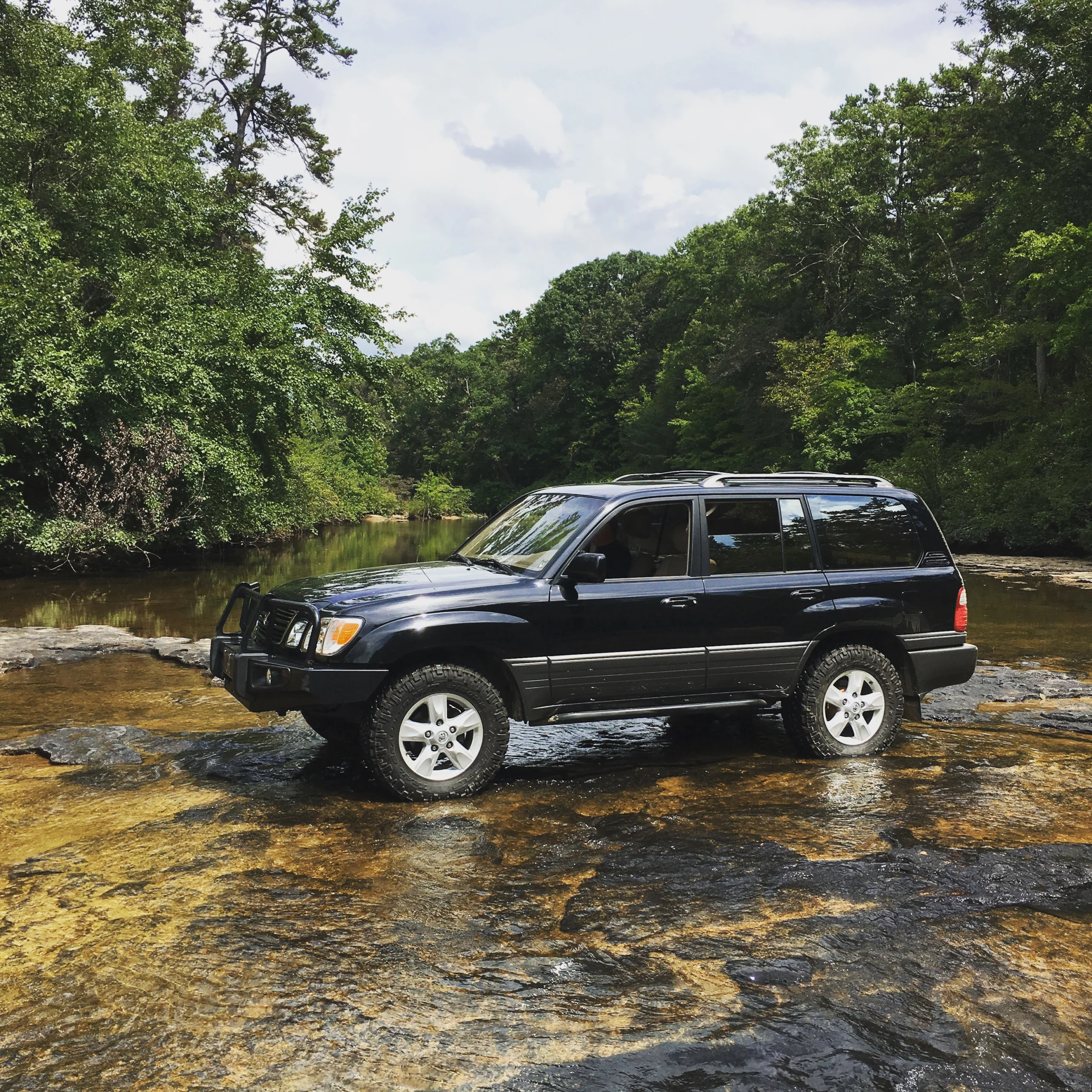
I’ve owned close to 20 Land Cruisers. I’ve been under more 100 Series trucks than I can count. And the thing that still gets me is how many of these trucks come in with the same problems. Problems that were completely preventable.
The 100 Series is one of the best vehicles ever built. I mean that. Toyota engineered these things to run in the most remote places on earth for 25 years without a dealership in sight. The powertrain is bulletproof. The platform is practically indestructible.
But here’s what I tell every owner who walks through my door: the truck doesn’t die. It gets neglected. And neglect has a way of showing up in places most people never think to look.
This post covers the most common problems I see on 100 Series trucks. Some are cheap to fix early and expensive to ignore. Some are small parts that can take out a whole engine. All of them are worth knowing.
Key Takeaways:
- The timing belt is the most important service on the 100 Series: skip it and you can lock the engine
- Heater T’s are plastic coolant fittings that fail quietly and drain your cooling system fast
- Most 100 Series leaks live underneath the truck, not in the engine bay
- Wheel bearings need repacking every 30,000 miles. Almost nobody does this.
- A clean interior tells you nothing about what’s going on underneath
The Timing Belt: The One Service You Cannot Skip
The timing belt is the first thing I check on any 100 Series that comes through the door. It needs to be replaced every 100,000 miles. Most trucks that come to me haven’t had it done. Or the owner has no record of it ever being done.
Here’s why that matters. The 2UZ-FE engine in the 100 Series is what’s called an interference engine. If the timing belt snaps while the engine is running, the pistons hit the valves. At that point, you’re not talking about a belt replacement. You’re talking about an engine rebuild. Or a new engine entirely.
What the Job Actually Includes
When we do a timing belt on a 100 Series, we don’t just swap the belt. We replace the water pump, the belt tensioner, the idler pulleys, and the seals at the same time. All of those parts are on the same service interval. It makes no sense to put a new belt on a truck and leave a worn water pump in there. You’d just be pulling the same components back out again in 20,000 miles.
What Happens If You Skip It
I’ve seen it go bad. An owner buys a used 100 Series with no service history, doesn’t think to ask about the timing belt, and a month later the belt lets go at highway speed. The engine is done. That’s a $10,000 mistake on a part that costs a fraction of that to replace on schedule.
If you don’t have paperwork proving the timing belt has been done, treat it as overdue. It’s not worth gambling on.
Does the 100 Series timing belt need to be replaced at exactly 100,000 miles? The 100,000-mile interval is the guideline, but age matters too. If your truck is over 10 years old and you can’t confirm the belt has been replaced, have it inspected. Heat and time degrade rubber even on lower-mileage trucks.
How much does a 100 Series timing belt replacement cost? It varies by shop, but budget for a full water pump and timing kit, not just the belt. Any shop quoting you just the belt price is leaving out half the job.
Can I drive a 100 Series with an overdue timing belt? Every mile you drive past the service interval is a gamble. There’s no warning before a timing belt fails. It just snaps.
Heater T’s: The Small Part That Can Lock Your Engine
Most 100 Series owners have never heard of heater T’s. They’re small plastic fittings in the coolant system, easy to overlook, easy to forget. But when one cracks, it drains the cooling system fast. Run the engine hot enough without coolant and you’re looking at a seized motor.
These fittings are original Toyota plastic. After 200,000 miles of heat cycles, expanding and contracting every time the engine warms up and cools down, they get brittle. They don’t give much warning before they go.
Why This Is a Pattern, Not a Fluke
Almost every high-mileage 100 Series I see has heater T’s that are overdue for replacement. This isn’t a defect. It’s just what happens to plastic at that age and mileage. The part is inexpensive. The labor to replace it is reasonable. The cost of ignoring it is not.
How We Handle It
When a 100 Series comes in for a timing belt or any major service, we inspect the heater T’s as part of the job. If they’re showing age, white, chalky, cracked at the edges, we replace them. It’s one of those items that makes no sense to leave alone when you’re already in that area of the engine.
What are heater T’s on a Land Cruiser? Heater T’s are plastic coolant fittings that route coolant through the heater core. On the 100 Series, they’re located in the engine bay and are original to the vehicle. After high mileage, the plastic becomes brittle and prone to cracking.
How do I know if my heater T’s have failed? A cracked heater T typically shows up as a coolant leak under the hood or a rapid drop in coolant level. In a worst case, you may notice the temperature gauge climbing before you see the leak. If your 100 Series is over 200,000 miles and you’ve never replaced them, have them inspected.
Oil Leaks: What’s Underneath Tells the Real Story
I say this to almost every customer who comes in to look at a used 100 Series: all the expensive problems are underneath the truck. People look at a nice interior and never pop the hood. And they definitely don’t get underneath.
The 100 Series has several common oil leak points. Some are minor. Valve cover gaskets and cam tower seals are nuisances, but they’re not urgent. Others are more involved.
Rear Main Seal
The rear main seal is the most labor-intensive oil leak on the 100 Series. The seal itself is not expensive. But getting to it requires removing the transmission and transfer case. That’s a significant labor job. When we quote a rear main seal replacement, customers sometimes push back on the price. Until I explain that we have to pull the transmission out of the truck to get there.
Oil Pump Cover Seals
The oil pump cover seals are another common leak on higher-mileage trucks. These tend to seep rather than drip, so owners often don’t notice them until the leak has been going on for a while. Left alone, a slow seep becomes a real problem.
What to Look for Before You Buy
If you’re shopping for a 100 Series, get underneath it. Look for active drips, wet spots on the frame rails, and buildup around the transfer case and rear of the engine. A truck with multiple leaks is not necessarily a deal-breaker. But it tells you what the maintenance history has been. That matters a lot on a platform like this.
Are oil leaks common on the 100 Series Land Cruiser? Yes. At higher mileage, seals and gaskets age like they do on any vehicle. The difference is that the 100 Series keeps running even with some leaks. That can lead owners to ignore problems longer than they should.
Is the rear main seal replacement worth doing on a high-mileage 100 Series? Yes, if the truck is otherwise in good shape. A rear main seal leak that’s left alone will contaminate the transmission fluid and cause bigger problems. The repair is expensive, but it’s far less expensive than what comes next if you skip it.
Wheel Bearings: The 30,000-Mile Service Nobody Does
The 100 Series has serviceable wheel bearings. That means they need to be repacked with grease on a regular interval, about every 30,000 miles. This is not a widely known service requirement. Most owners have never done it. Most general mechanics don’t mention it.
When wheel bearings run low on grease, they overheat and wear prematurely. Replacement is more involved than on a modern vehicle with sealed bearings. At OTM, we track this service for our customers because it’s one of the items that can quietly cause real damage if it falls through the cracks.
Pro Tip: If you bought your 100 Series used and have no service history, assume the wheel bearings have never been repacked. It’s a straightforward job that pays for itself in bearing life.
How often do 100 Series Land Cruiser wheel bearings need to be serviced? Every 30,000 miles, or sooner if you drive in dusty or wet conditions. The bearings on the 100 Series are not sealed. They require periodic cleaning and repacking with fresh grease.
What happens if you don’t service the wheel bearings on a 100 Series? Dry bearings overheat and wear faster. You may notice a hum or vibration at highway speed before the bearing fails. Complete bearing failure can affect handling and, in a worst case, cause a wheel to seize.
Suspension Bushings: Why the Ride Changes Over Time
Suspension bushings are rubber components that cushion the joints in the suspension system. On the 100 Series, they dry rot and crack over time, especially in warm climates like Alabama. As they deteriorate, play develops in the suspension. The truck starts to feel loose. Owners often chalk it up to age.
Replacing the bushings is one of the most noticeable improvements you can make to a high-mileage 100 Series. The truck drives tighter, handles better, and feels more like it did when it was newer. It’s not a glamorous repair, but the difference before and after is real.
How do I know if my 100 Series suspension bushings are worn? Clunking over bumps, vague steering, and a general looseness in the front end are the most common signs. A visual inspection can show cracking and separation in the bushing material.
Are suspension bushings expensive to replace on a 100 Series? The parts themselves are not expensive. Labor varies depending on how many bushings are being replaced and whether the truck has been serviced regularly. We typically recommend doing a full set when the suspension is apart rather than replacing individual bushings piecemeal.
What to Do If You’re Not Sure Where Your Truck Stands
If your 100 Series has high mileage, an unknown service history, or you’ve been putting off maintenance, the best first step is a thorough inspection. At OTM, every diagnosis is done in person. We use a red, yellow, green grading system on every estimate: red means it needs attention now, yellow means keep an eye on it, green means it’s in good shape.
We don’t do phone estimates. We’re not going to give you a number before we’ve seen the truck. What we can do is look at it, tell you exactly what we see, and give you a clear picture of what your Cruiser needs.
200,000 miles is really nothing on one of these trucks. It’s just the breaking-in phase. What determines whether a 100 Series lasts another 200,000 miles is whether it gets the right attention at the right time.
Schedule a Diagnosis at OTM
If you’re in Birmingham and your 100 Series is due for service, or you’re not sure when it last had a timing belt, bring it in.
We’re at 8444 Parkway Drive in Leeds, AL, and our downtown Birmingham location handles oil changes, brakes, and scheduled maintenance. Contact us today to book an appointment.