
LS Swap on the FJ40: What It Costs and Whether It’s Worth It
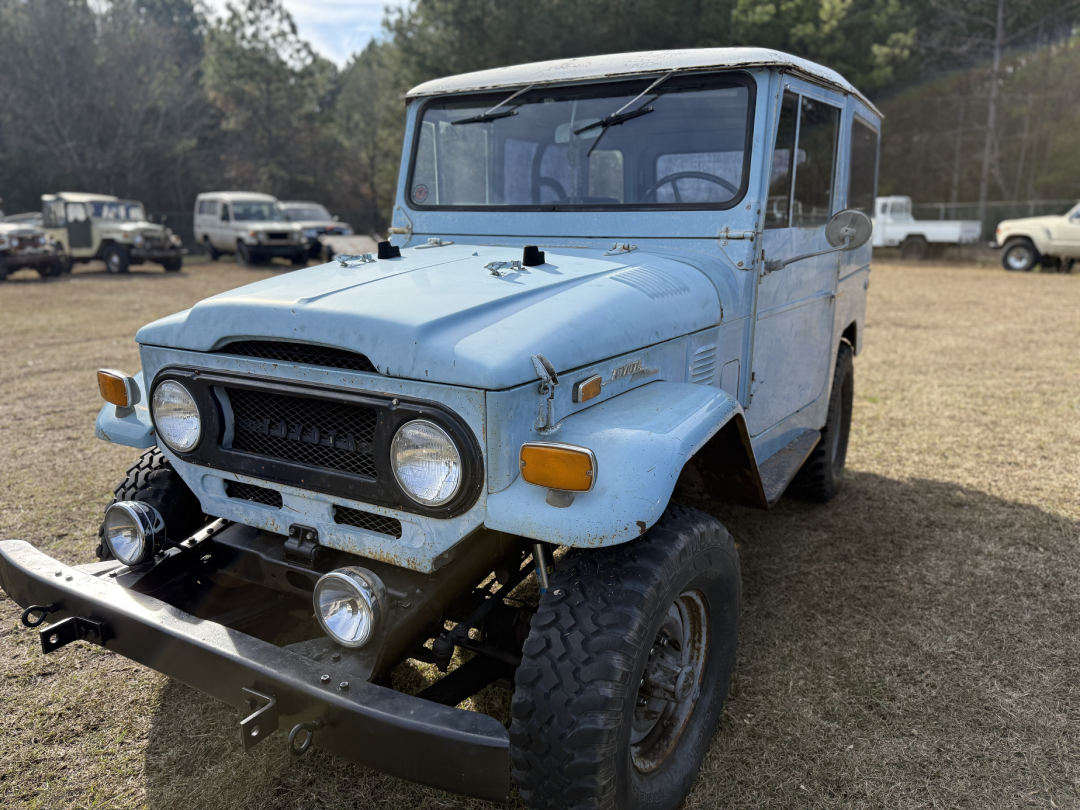
If you spend any time in FJ40 circles, the LS swap comes up constantly. It’s the most talked-about, most debated, most frequently performed engine upgrade on the platform. Some owners swear by it. Others think it ruins what makes the truck special.
I’ve done enough of them to have a real opinion, and I’ve also done enough restorations on original powertrains to know when the swap isn’t the right answer. This post covers what the swap actually involves, what it realistically costs, and how to decide whether it makes sense for your specific truck and goals.
Key Takeaways:
- The GM LS engine family is the most common and most practical swap for an FJ40. Parts are everywhere. Shops are familiar with it.
- An LS swap on an FJ40 is a significant investment. Budget accordingly and don’t cheap out on the execution.
- The original 2F engine, rebuilt properly, is a capable and authentic alternative for owners who want to keep the truck stock.
- The swap changes what the truck is. That’s the point. Make sure that’s what you want.
- Execution matters more than the specific LS variant. A well-built swap with a common LS is better than a poorly built one with an exotic version.
Why the LS
The original F and 2F engines in the FJ40 are good engines. They’re durable, they’re simple, and they have a long service life when maintained correctly. They’re also from a different era of engine design. The 2F makes somewhere between 125 and 155 horsepower depending on the year and state of tune. It pulls the FJ40 around town without complaint, but it works hard on the highway and doesn’t have a lot left over for demanding terrain with a loaded truck.
The LS engine family is the opposite. GM’s small-block V8 platform, introduced in the late 1990s, produces significant power from a compact, lightweight package. A stock LS3 makes over 400 horsepower. Even a more modest LS1 or LS2 with basic modifications produces 300 to 350 horsepower. The engines are compact enough to fit in the FJ40 engine bay with appropriate mounts, the parts ecosystem is enormous, and the engines are well-understood by shops and DIY builders across the country.
The performance difference between an original 2F and an LS is not subtle. An FJ40 that felt like it was working hard at 65 mph becomes a truck that feels effortless at highway speeds and pulls cleanly through terrain that would have the original engine laboring. Owners who do the swap and then drive the truck consistently say it changes how they use it.
Why do people swap LS engines into FJ40 Land Cruisers? The original F and 2F engines in the FJ40 produce modest horsepower by modern standards. An LS V8 produces two to three times the power in a compact, lightweight package with abundant parts availability and widespread shop familiarity. The swap transforms the driving character of the truck while keeping the original platform.
What LS engine is best for an FJ40 swap? The LS1, LS3, and LQ9 truck engines are the most commonly used. The right choice depends on budget, target power level, and whether you’re prioritizing a junkyard-budget build or a higher-output purpose-built swap. All are strong options. Execution matters more than which variant you choose.
What the Swap Actually Involves
This is where the conversation gets specific. An LS swap in an FJ40 is not a parts-in-a-box swap where everything lines up out of the crate. It’s a custom fabrication and integration job that requires solving several problems.
Motor Mounts
The LS doesn’t bolt into the FJ40 engine bay on factory mounts. Custom motor mounts have to be fabricated or sourced from a manufacturer that makes them for this application. The mount geometry determines how the engine sits in the bay, which affects clearance to the firewall, hood clearance, exhaust routing, and transmission alignment.
Transmission
An LS engine paired with the original Toyota transmission is possible in some configurations but unusual. Most LS swaps in an FJ40 use a modern GM or aftermarket transmission that’s appropriate for the power level. The most common pairing is an LS with a T56 6-speed manual or a 4L60E or 4L80E automatic. Each has its own adapter requirements to connect to the Toyota transfer case.
Wiring and Engine Management
The LS family uses electronic fuel injection and a dedicated engine control unit. The wiring harness from a donor vehicle has to be cleaned up, simplified, and integrated into the FJ40 electrical system. This is one of the steps where build quality shows. A properly done harness is clean and reliable. A poorly done harness creates gremlins that are difficult to diagnose and frustrating to live with.
Cooling System
An LS produces significantly more heat than the original 2F. The factory cooling system is not adequate. A proper LS swap includes an upgraded radiator, appropriate fan setup, and attention to coolant routing to make sure the engine runs at the right temperature under all conditions.
Exhaust
Custom headers and exhaust are part of every LS swap. Getting the exhaust to exit the FJ40 cleanly, avoid heat issues with the cab and floorboard, and flow well for the engine’s output requires fabrication. This is another place where build quality matters.
Fuel System
The original FJ40 fuel system is not compatible with a fuel-injected engine. A returnless EFI fuel system with an appropriate in-tank or inline pump, pressure regulator, and fuel lines is required.
How long does an LS swap take on an FJ40? A properly executed LS swap is a multi-week shop project when done right. Custom fabrication, wiring, cooling system, and exhaust all take time. Shops that quote a very fast turnaround are usually cutting corners somewhere in that process.
Can I do an LS swap on an FJ40 myself? Mechanically experienced builders do complete LS swaps as DIY projects. It requires fabrication skills, wiring knowledge, and access to appropriate tools. For most owners, having it done by a shop that has done it before produces a more reliable result than a first attempt at home.
What It Realistically Costs
I want to be direct about this because the numbers people post online are often incomplete.
A junkyard LS with basic accessories, paired with a used transmission and done by someone who’s cutting costs at every step, can be done for less than a professionally executed swap. It will also drive like something that was done that way.
A properly executed LS swap on an FJ40 at a shop like OTM includes a quality engine, appropriate transmission, custom motor mounts, proper wiring harness work, a capable cooling system, custom headers and exhaust, and thorough testing before the truck leaves. That’s a significant investment. The exact number depends on the engine choice, transmission, and what else is being done to the truck at the same time.
Owners who are serious about the swap should budget meaningfully above the parts cost alone. The labor to do it correctly is substantial, and the labor is what separates a truck that drives well and is reliable from one that has recurring issues.
How much does an LS swap cost on an FJ40 Land Cruiser? A properly executed LS swap at a reputable shop is a significant investment when all components and labor are included. Engine, transmission, mounts, wiring, cooling, exhaust, and installation labor all add up. Budget conversations are best had in person with the shop doing the work, with a full understanding of what’s included.
When to Keep the Original Engine
Not every FJ40 should have an LS swap. For some trucks and some owners, it’s the wrong answer.
If the truck has an original, running 2F engine in solid condition, a proper rebuild is worth considering. A freshly rebuilt 2F with updated carburetor and ignition components is a reliable, period-correct drivetrain that drives the way the truck was meant to drive. For owners who value originality or who primarily use the truck for lighter duty trail work and weekend driving, a rebuilt original is a legitimate and often less expensive path.
The LS swap makes the most sense when the truck is going to be used hard, driven at highway speeds regularly, loaded with gear and people, or when the original engine is worn out and a rebuild isn’t a compelling investment relative to what the owner wants the truck to do.
Ready to Talk Through a Build?
If you’ve got an FJ40 and you’re thinking about a swap, or you’re not sure whether the swap or an original rebuild makes more sense for your truck, come talk to us before you start ordering parts.
We’ve done these builds. We know where the money goes and where it doesn’t, and we’ll give you an honest assessment of what makes sense for your specific truck and how you plan to use it.
Give us a call and let’s connect.