
200,000 Miles Is Not Old: The Land Cruiser High-Mileage Reality
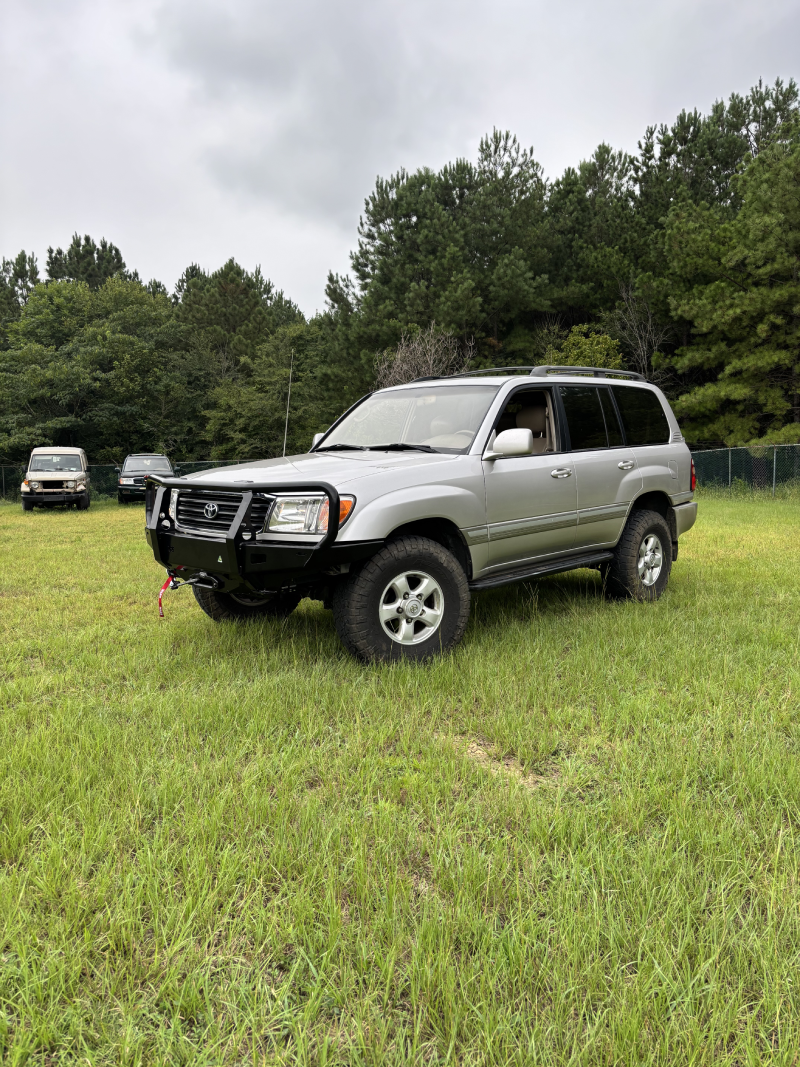
I get calls from people who are looking at a 100 Series with 220,000 miles on it and want to know if it’s too high. My answer is always the same. It depends on zero things about the mileage and everything about the maintenance history.
200,000 miles on a Land Cruiser is not old. It’s not even close to old. These trucks were engineered to run in the most remote and demanding conditions on earth for decades at a time. The 2UZ-FE engine in the 100 Series is one of the most durable production engines Toyota ever built. The platform is overbuilt by modern standards in almost every respect.
What determines whether a high-mileage Land Cruiser is a good truck or a bad one is not the odometer. It’s what has and hasn’t been done to the truck over those miles.
Key Takeaways:
- A well-maintained Land Cruiser at 250,000 miles is a better truck than a neglected one at 100,000.
- The 2UZ-FE and 1FZ-FE engines are both capable of running well past 400,000 miles with proper care.
- Maintenance history is the only number that actually matters when evaluating a high-mileage Cruiser.
- Most of the expensive problems on these trucks come from deferred maintenance, not mechanical fatigue.
- Knowing what to look for is what separates a great high-mileage buy from an expensive mistake.
Why Land Cruisers Are Different
Most vehicles are engineered to an expected service life. The platform, the engine tolerances, the material choices, all of it is calibrated around a certain number of years and miles. When a vehicle gets past that point, things start to go.
Land Cruisers are engineered differently. Toyota builds these trucks for markets where a breakdown is not an inconvenience. It’s a survival event. The 70 Series Land Cruiser is still in production today because it’s the vehicle of choice for remote military operations, NGO relief work, and mining operations in places where there is no parts supplier within 500 miles. The engineering philosophy behind all Land Cruisers reflects that.
The 100 Series 2UZ-FE engine has machined tolerances that hold up over hundreds of thousands of miles. The platform is heavy and rigid, which protects components from the kind of flex fatigue that causes problems on lighter vehicles. The drivetrain components are overbuilt relative to what highway driving actually requires of them.
None of that makes these trucks invincible. It makes them durable. There’s a difference.
How many miles can a Land Cruiser 100 Series last? With proper maintenance, well past 400,000 miles. There are documented examples of 2UZ-FE engines running cleanly past 500,000 miles. The platform supports that kind of longevity when the maintenance has been done correctly. Mileage alone is not a limiting factor on these trucks.
Is a 100 Series with 200,000 miles a good buy? It depends entirely on the service history. A 100 Series at 200,000 miles with a documented maintenance history, a clean timing belt, recent fluids, and no significant deferred maintenance is a truck with a lot of life left. One with the same mileage and no records is a much harder proposition.
What High Mileage Actually Tells You
A high odometer on a Land Cruiser tells you the truck has been driven. It doesn’t tell you how it was maintained, where it was driven, who drove it, or what condition the components are in. None of those questions get answered by the number on the dash.
What high mileage does mean on a 100 Series is that certain maintenance items are either due or past due. The timing belt has a 100,000-mile interval. If the truck is at 230,000 miles and has had two timing belt services, that’s a truck that’s been cared for. If it’s at 230,000 miles with no documentation of any timing belt replacement, the math on that is not reassuring.
The same logic applies to wheel bearings, differential fluids, suspension bushings, cooling system maintenance, and every other platform-specific service that these trucks need. High mileage amplifies the importance of knowing the history, not because the miles are the problem but because every additional mile without service is another mile the truck has been running without what it needs.
What maintenance does a 100 Series need at high mileage? Timing belt and water pump if not documented, wheel bearing inspection and repacking, differential and transfer case fluid changes, cooling system flush and inspection, heater T inspection, suspension bushing inspection, and a full oil leak assessment. These are the items most commonly deferred on high-mileage trucks and the ones most worth knowing the status of.
The Right Way to Evaluate a High-Mileage Cruiser
Whether you’re buying a high-mileage Land Cruiser or trying to understand where your existing truck stands, here’s how I think through it.
Start With the Records
Service records are the most valuable thing a high-mileage Land Cruiser can have. A stack of receipts that shows timing belt replacements, regular oil changes, differential services, and other maintenance done on schedule tells you something important: this truck was cared for by someone who knew what it needed.
Gaps in the records are information too. A truck with oil changes every 5,000 miles but no documentation of a timing belt at 100K is a truck where at least one important service is unaccounted for. That doesn’t make it a bad truck. It means you need to address that item before driving on.
No records at all means starting from scratch. That’s not a deal-breaker either. It means treating every platform-specific service as overdue and working through the list systematically. At OTM, we’ve built the maintenance picture for a lot of trucks that came in with unknown histories. It takes a thorough inspection and some upfront service work, but you end up knowing exactly where the truck stands.
Look Underneath
Most of the expensive problems on a 100 Series are underneath it. Rust, oil leaks, worn suspension components, differential leaks. A clean exterior and a nice interior tell you nothing about the frame, the seals, or the bushings. The underside of the truck tells the real story.
Pay Attention to How It Drives
A high-mileage 100 Series that’s been maintained drives well. The steering is precise. The suspension absorbs inputs cleanly. The engine pulls smoothly without hesitation. A truck that feels loose, wanders, or has an engine that’s working harder than it should points to maintenance items rather than age.
Get a Specialist Inspection
If you’re buying a high-mileage 100 Series, have it inspected by a shop that knows the platform before you buy. A general mechanic can check the basics but won’t know what to look for specifically on a 100 Series. The platform-specific items, heater T’s, wheel bearing service history, timing belt documentation, are what make the difference between understanding what you’re buying and guessing.
Is a pre-purchase inspection worth it on a high-mileage Land Cruiser? Yes, always. The cost of an inspection is a small fraction of the cost of discovering a major deferred maintenance issue after the purchase. A specialist inspection on a 100 Series looks at the platform-specific items that a general mechanic won’t flag, and it gives you information you can use in the purchase negotiation or to plan your first service needs.
What a Properly Maintained High-Mileage Cruiser Looks Like
I want to paint a picture of what we’re actually talking about.
A 100 Series at 280,000 miles with two documented timing belt services, current wheel bearings, fresh differential fluids, a clean cooling system, and no significant leaks is a truck that’s in fundamentally good shape. The seals are aging, the bushings might be due, and there’s probably a valve cover gasket seeping. These are normal, manageable items on a truck this age.
That truck is not a gamble. It’s a known quantity. It needs regular maintenance to stay that way, and probably has a list of items worth addressing in the next service cycle. But the foundation is solid.
A 100 Series at 180,000 miles with no service records, no timing belt documentation, original heater T’s, and differential fluids that have never been changed is a truck with significantly more uncertainty, regardless of how clean it looks or how well it runs today.
Mileage is not the story. The story is what happened during those miles.
Thinking About Buying or Already Own One?
If you’re evaluating a high-mileage 100 Series or you own one and aren’t sure where things stand, we’re the shop to call. We know these trucks. We know what 250,000 miles looks like when a truck has been taken care of and what it looks like when it hasn’t.
Pre-purchase inspections, full mechanical assessments, and first-service plans for trucks with unknown history are a regular part of what we do.
Contact us at our Leeds or Downtown location.